



Before anything else, I want to thank Rod Paddock. Rod became Editor in Chief of CODE Magazine in 2001, back when .NET was still in beta, and held the job until this year. That’s twenty-five years of issues, and in all that time the magazine never missed a release. Rod has now retired, and he has earned it many times over.
What I admire most about Rod is his feel for talented people. He could spot someone with something worth saying, often before that person knew it, and then give them room to say it. That instinct is why CODE has such a strong group of authors today, many of whom have written for us for years and still do. A magazine is only as good as the people who write for it, and Rod built something that doesn't depend on any single person, himself included. That's good architecture. Thank you, Rod. Enjoy retirement, and may your pager never go off again.
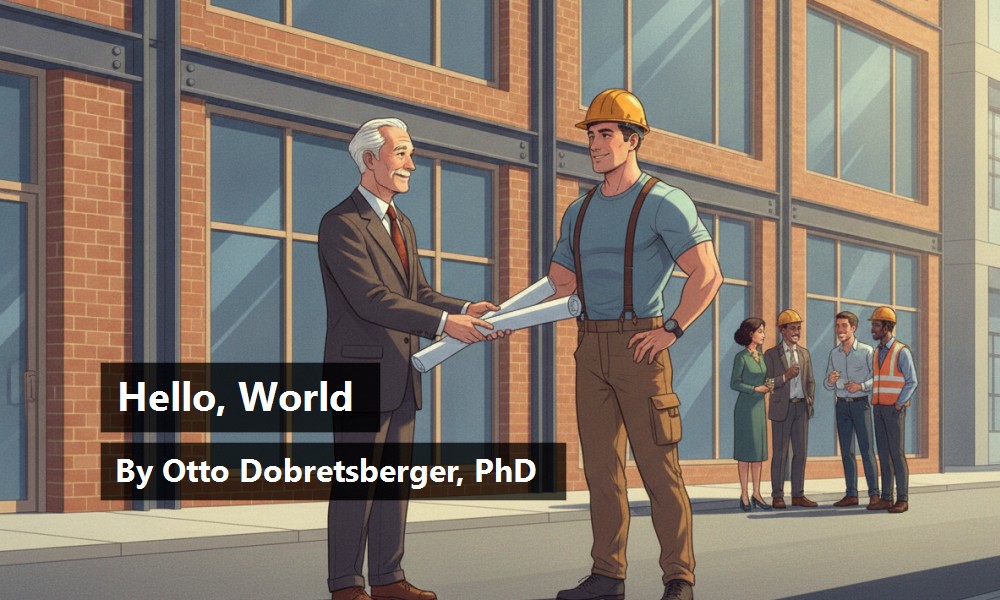
Which brings me to the chair. My name is Otto Dobretsberger, and I took over as Editor in Chief in August. Some of you may already know me. I joined CODE in 2014 as a Senior Software Engineer, and I still am one. I spend my days writing code, debugging it, and occasionally wondering why it worked on my machine yesterday. I mention that because I think it matters. I read these articles the same way you do, as a developer looking for something I can use on Monday morning. I know I have big shoes to fill. Think of this as a new maintainer on a mature, stable project, not a hard fork. What I can promise is that I'll work hard to keep CODE what it has always been: the best content for developers, written by developers.
To our recurring authors, thank you for your loyalty. Some of you have been writing for us since before Git existed, and you keep showing up with thoughtful, practical, well-tested work. You are the backbone of this magazine, and I'm grateful to be working with you. To the new authors joining us, welcome. We're glad you're here, and I hope this is the first of many articles.
If you're reading this and thinking you might have an article in you, you probably do. Consider my inbox open for pull requests. Send me a proposal at editor@codemag.com. It doesn't need to be polished; nobody's first commit is. Tell me what you want to write about, why it matters to developers, and what readers will take away from it. Some of the best articles we've published started as a few rough sentences in an email.
A lot about CODE will stay the same. You'll still find in-depth technical articles, real code, and authors who know their subject because they work with it every day. Call it backward compatible. But a few things are changing, and more changes will follow. The first one is in this issue. We've added a tips section that will be a regular part of every issue from now on. Each tip is a short, useful trick you can put to work right away, the kind you wish had been in that forum thread from 2009 where the last reply just says “Never mind, fixed it.” If you have a tip you've been meaning to share, or an idea for where this section could go, email me at the same address. Tips are also a great way for first-time authors to get their name in print.
I can't talk about the future of this magazine without talking about AI. AI tools and technologies have moved incredibly fast over the past few years, and they've changed how many of us write, test, and think about software. Naturally, a good share of our content will reflect that. You'll see more articles on building with AI, working alongside it, and understanding what's happening under the hood. But not everything will be about AI. Plenty of problems still come down to a person, a stack trace, and a strong cup of coffee. Developers are shipping great software with conventional tools and techniques, and those topics still deserve careful, expert coverage. We have those articles in the pipeline, and we'll keep publishing them.
Finally, keep an eye on 2027. We have plans in the works, both for new content and for new ways to collaborate with our authors and readers. For now they live on a feature branch, but I'm excited about them, and I think you will be too.
Thank you for reading CODE. See you in the next release.