


FabCon Europe 2026: OneLake Gets More Data and Stronger Governance for AI
by Ginger Grant | September 30, 2026
At the European Microsoft Fabric + SQL Community Conference (FabCon Europe) in Barcelona this week, Microsoft made OneLake a stronger foundation for AI. New mirroring and shortcut sources bring more organizational data into OneLake for grounded queries with Fabric IQ, while a redesigned governance experience and new Fabric policies give administrators far more control over the tenant. Of everything announced, these are the changes I expect Fabric users to appreciate most.
More Data Sources in OneLake
Fabric has long supported shortcuts to Amazon S3 and Google BigQuery. Shortcuts avoid copying data, but that meant an extra step to get the data into OneLake for grounded AI with Fabric IQ. Microsoft announced that both sources can now be mirrored. Mirroring copies the data into OneLake and keeps it in sync with every update at the source.
Microsoft also added mirroring for Dynamics 365 and updated Azure Databricks so it can use OneLake as native storage
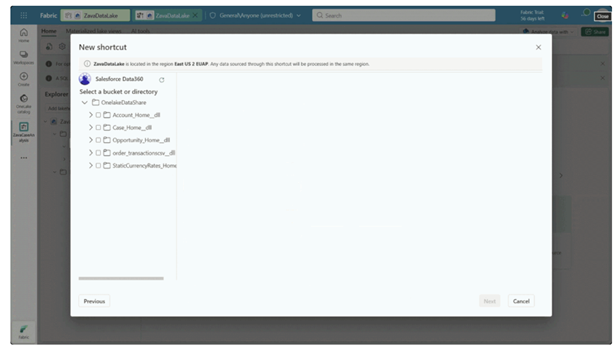
Salesforce, one of the largest stores of customer data outside Microsoft, is getting attention too. In the keynote, Microsoft announced shortcuts to Salesforce Data 360, so you can query that data live from Fabric. Microsoft followed the same path with other third-party sources: shortcuts first, then mirroring.
A Redesigned OneLake Catalog Governance Experience
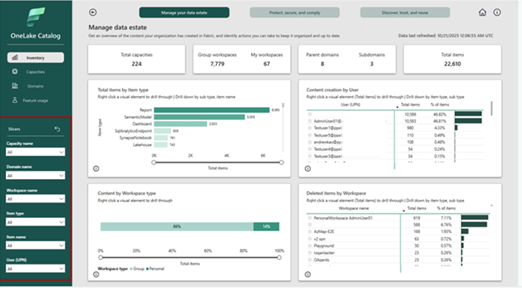
Fabric has always let you restrict data access, but the tools weren't intuitive. The redesigned OneLake catalog governance experience improves tenant-level data management, adds Copilot, and shows capacity usage alongside OneLake information, which is critical for managing tenant resources.
Fabric Policies
Fabric policies give administrators control at a higher level. You can set them at the tenant or capacity level, and they supersede other security settings. Use them to restrict what users can create in a workspace or how they share data. This is the first time Fabric lets you limit what users can create. Policies can also use Microsoft Purview labels, so you can govern data based on its content, a capability Fabric previously lacked.